
Why some €2 coins are worth so much
Every euro country may issue €2 commemorative coins with its own design. The big countries mint millions of each, so they circulate and stay at face value. The four small states outside the EU that use the euro (Monaco, the Vatican, San Marino and Andorra) are allowed only small issues, and their coins are mostly sold directly to collectors in presentation packs. They almost never reach a shop till.
Value comes from three things: how many were made (the mintage), how many collectors want one (famous people and anniversaries are popular), and condition. An uncirculated coin still in its original case is worth far more than the same coin with scratches.
The price ranges below are for uncirculated coins (for Monaco: in the original case), based on recent collector price lists and sales. They are estimates to guide you, not offers to buy. Prices change, so always compare several sources before you buy or sell.
The top ten
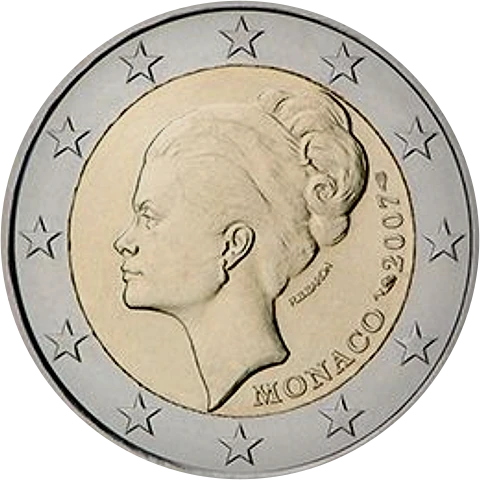
25th anniversary of the death of Princess Grace
- Mintage 20,000
- ≈ €1,500–3,000
The best-known rare euro coin. It shows a portrait of Grace Kelly, the Oscar-winning actress who became Princess of Monaco and died in 1982. Only 20,000 were made, all sold in cases, and demand from collectors far beyond the coin world keeps the price high. Copies and fakes exist, so buy only with the original case and certificate from a trusted dealer.
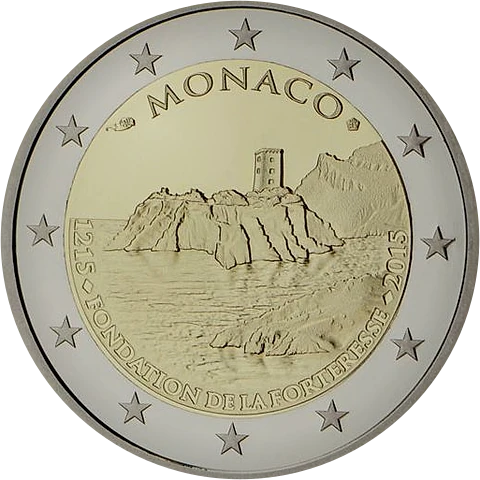
800th anniversary of the first castle on the Rock
- Mintage 10,000
- ≈ €1,000–2,000
With only 10,000 pieces, this is one of the smallest €2 issues ever. It marks the fortress begun on the Rock of Monaco in 1215 and shows a lone tower with the words "FONDATION DE LA FORTERESSE" between 1215 and 2015.
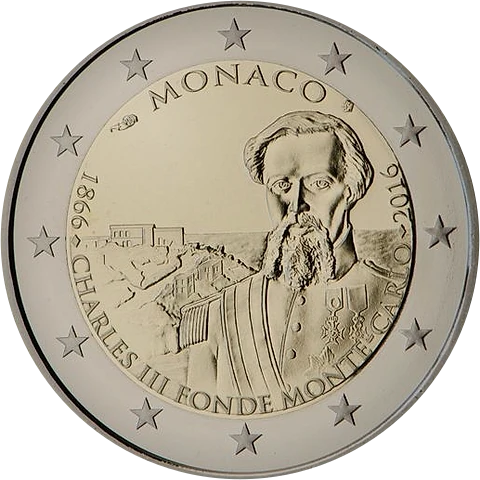
150 years of Monte Carlo, founded by Charles III
- Mintage 15,000
- ≈ €500–1,000
Monte Carlo means "Mount Charles", after Prince Charles III, who launched the district in 1866. The coin shows him in front of a Monte Carlo backdrop. A small mintage and a famous name make it one of the most wanted modern issues.
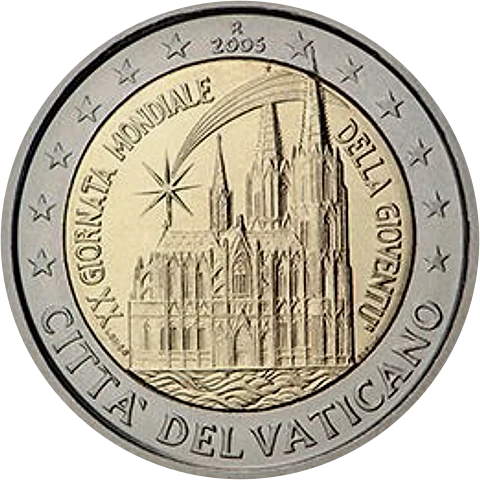
20th World Youth Day in Cologne
- Mintage 100,000
- ≈ €150–250
The first World Youth Day of Pope Benedict XVI. The coin shows Cologne Cathedral with a comet passing overhead, a nod to the star that guided the Three Kings, whose relics the cathedral keeps.
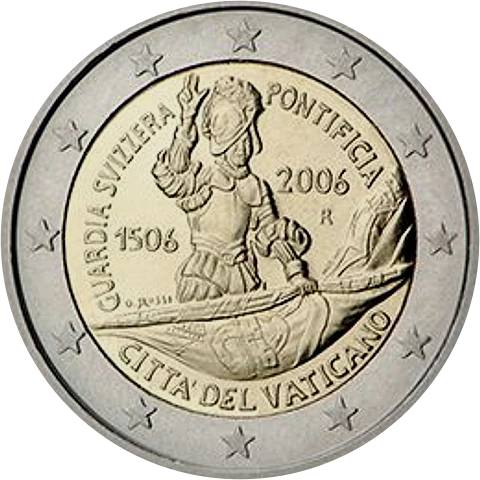
500 years of the Swiss Guard
- Mintage 100,000
- ≈ €100–230
The Pope's Swiss Guard was founded in 1506. The coin shows a guardsman swearing his oath beneath the flag, the same ceremony new recruits still perform every 6 May.
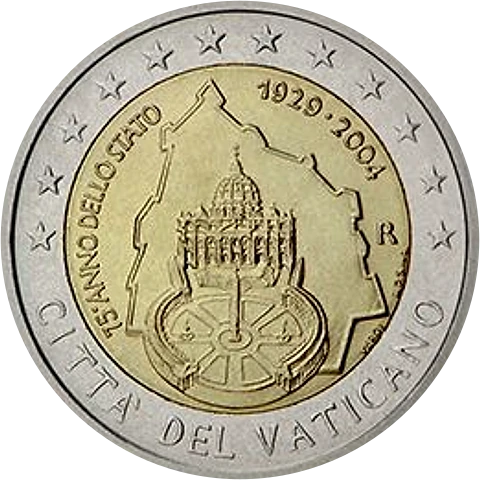
75 years of the Vatican City State
- Mintage 100,000
- ≈ €100–150
The Vatican's first €2 commemorative marks the 1929 Lateran Treaty that created the state. It shows St Peter's Basilica in front of a plan of the city walls.
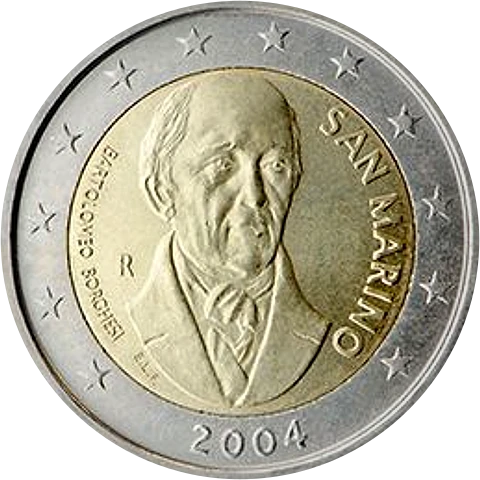
Bartolomeo Borghesi, historian and numismatist
- Mintage 110,000
- ≈ €60–145
A coin for coin lovers: Borghesi was a 19th-century expert on Roman inscriptions and coins who lived in San Marino. It was San Marino's first €2 commemorative.
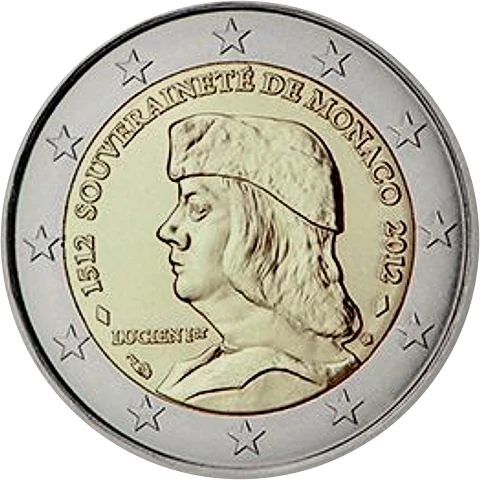
500 years of Monaco's sovereignty under Lucien I
- ≈ €50–150
Lucien I Grimaldi is credited with establishing Monaco's independence in 1512. It is not as scarce as the Monaco coins above, but it is still sought after, especially in its original case.
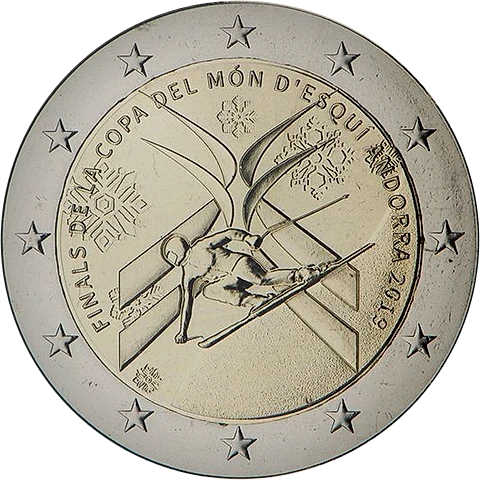
Ski World Cup Finals 2019
- ≈ €50–140
Andorra hosted the Alpine Ski World Cup Finals in March 2019, its biggest winter sports event ever. The coin shows a skier on the slope. Andorra's coins are popular because the country only joined the euro coin family in 2014.
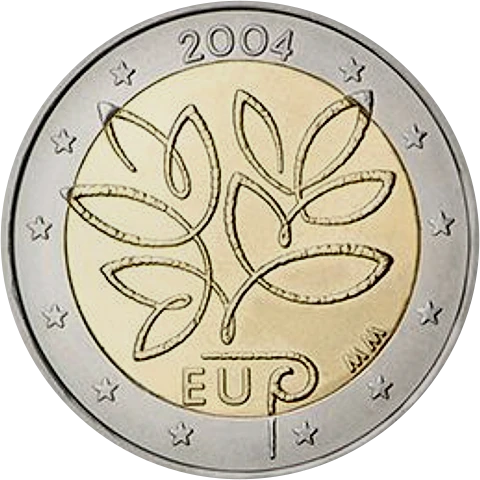
Enlargement of the EU by ten new countries
- Mintage 1,000,000
- ≈ €15–45
The surprise on the list: a million were made, yet it is one of the most wanted early commemoratives, partly because it was Finland's first €2 commemorative. It shows a pillar with sprouts growing from it.
How to check if you have one
Look at the national side (the side with the country design, not the map of Europe). The country and the year are written on it. If you find a coin from Monaco, the Vatican, San Marino or Andorra in your change, keep it: even their common designs are usually worth more than face value.
Then check the condition. Sharp details, full shine and no scratches mean much more money. Never clean a coin: cleaning leaves fine scratches and lowers its value.
Finally, beware of fakes. Rare coins are copied, sometimes by plating a common coin. If an offer looks too good to be true, ask for clear photos, the original case and certificate, and buy from dealers or collectors you trust.
Not sure what you have?
Take a photo with EuroCoiner: the AI finds the coin among every euro design and shows its collector's value, based on the condition it sees.